
Making of 'F1': Director Joe Kosinski, VFX Supervisor Ryan Tudhope On Apple iPhone and Sony Camera Innovations, Metaphysic AI & the VFX Shot That Took One Year to Complete


To capture the speed and realism of Formula 1 racing, inventive director Joe Kosinski incorporated some newly-developed tools and techniques—including new camera systems and Metaphysic’s AI tech—into production of his racing drama F1. He and VFX supervisor Ryan Tudhope of Framestore (which shared the majority of the VFX work with ILM) recently detailed how they applied their state-of-the-art innovations during a panel conducted by The Creative + Tech Orbit’s Carolyn Giardina.
For starters, Kosinski emphasized that he and DP Claudio Miranda filmed as much as possible in-camera, including on location at actual F1 events, with stars Brad Pitt and Damson Idris training for many months in order to get behind the wheel during filming of the Apple Original Film. “That foundation of having something practically is so important for a film where you’re trying to make the visual effects supporting and invisible.”
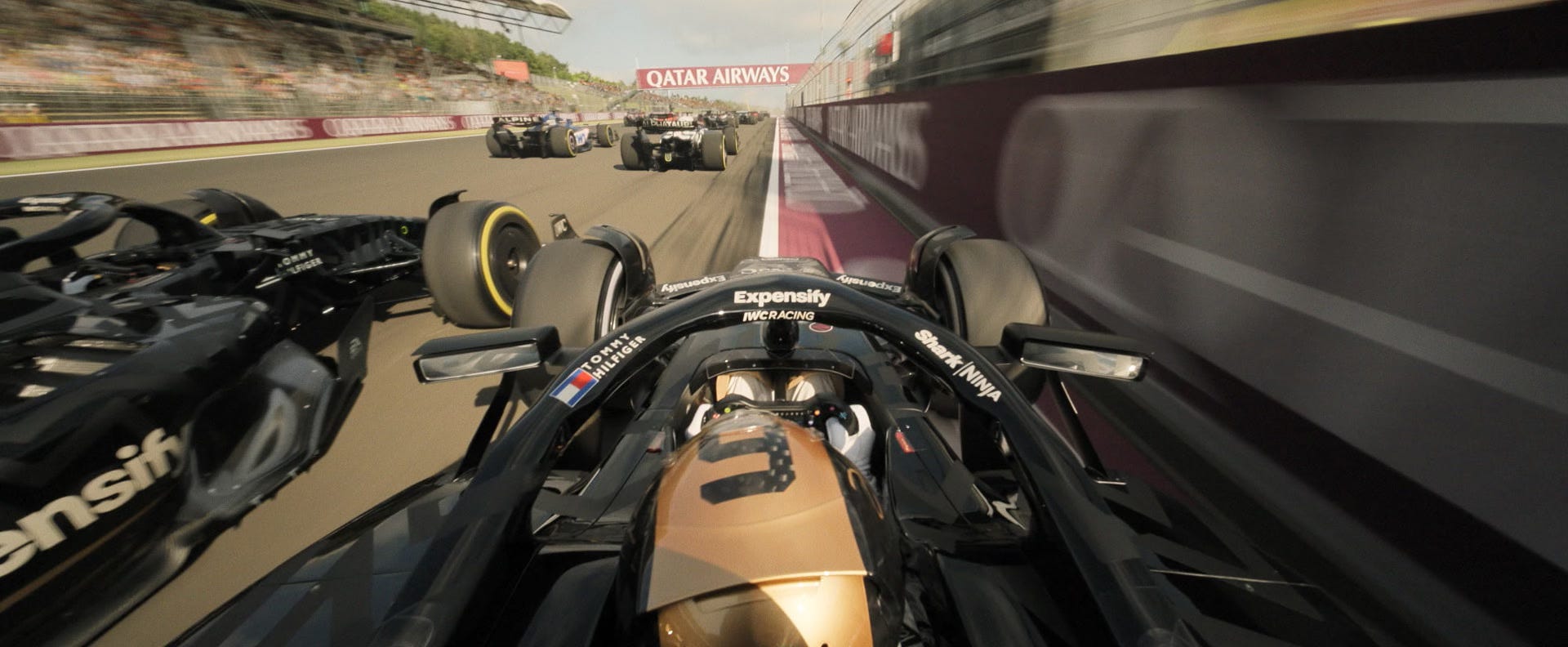
Uniquely, Apple also developed a clever piece of camera tech for the production, building on a system that’s already in use as part of the broadcast coverage of the actual races. “Every F1 car in a race has a little pod behind the driver’s head, and inside that pod is a tiny broadcast camera, half HD, that’s streaming footage live that they can cut to at any point during the broadcast,” Kosinski said, noting that this footage can also be streamed on the F1 racing app, allowing fans to click between driver’s views during races. Said the director, “it’s an amazing technology; it’s a very small camera, but the quality is not great.”
Formula One, he continued, allowed his production to tap into this system. “For two of the cars out of the 20 in every race [we were allowed to] take their tiny camera out, and we replaced it with an Apple-designed camera, which was based on a modified iPhone camera that record 4K Pro Res footage to an onboard chip. So we had that running on a couple cars every single race.”
To make this movie, Sony also invented new camera tech for filming inside the cars: A new version of the Rialto, the camera system used in the cockpits of the F18s while filming Kosinski’s Top Gun: Maverick. Kosinski explained that for an F1 car, “even a few kilograms can change the way it feels, so we worked with Sony to develop a brand new prototype camera, which was about a third of the size and a fraction of the weight [of the Rialto used in Maverick] but still IMAX quality, full frame, 4K.” Roughly 20 such prototypes were built into Mercedes Benz racing cars for production. “They were just 3-4 inches square, about two-inches thick,” the director said. “So it was a racing machine designed to shoot this film.”
Sony’s Venice 2 was the main camera used in filming the movie, and broadcast footage was additionally incorporated into the production. “From a visual effects standpoint, having a variety of ways we’re approaching the work was really helpful in keeping it invisible, because then the audience doesn’t get used to seeing the same thing over and over again,” advised Tudhope.
While shooting Top Gun: Maverick, the VFX team replaced (they frequently use the term “re-skinning”) the F18s with the models required in the story (such as the retired F14 or fictional Darkstar). For F1, the race cars were similarly changed to suit the models needed in the story, while face replacement put the actors in shots that involved F1 drivers behind the wheel, including 31 shots from the aforementioned Apple camera system. “Every F1 driver played Sonny Hayes or Joshua Pierce in this movie,” Kosinski said, “We replaced their car, and we’d use their head movement and then re-skin it with our driver’s helmet. So they all got to be actors in the film.” Those F1 drivers included seven-time Formula One champion Lewis Hamilton (who himself was involved in the production via his Dawn Apollo Films banner).
The film also required delicate work to create a younger Pitt for a sequence that involves an old videotape of Sonny. After considering various vendors and approaches, they chose to work with Metaphysic, the company behind the deaging of Tom Hanks and Robin Wright in Roboert Zemeckis’ 2024 drama Here.
“The biggest challenge actually was just getting the rights to the footage to train those models,” Tudhope related. “We went back to some of our earlier movies, and A River Runs Through It was the one that we picked. And then our friends at Apple worked with the producers of that film and the studio to license for the purpose of training an AI model. And then once that was done, the AI model basically knows what it thinks Brad should look like, and it sees what Brad does look like, and it basically gives you the difference. It’s amazing in the sense that you get a version very quickly to start working within the edit.”
Kosinski emphasized that he aimed to shoot racing scenes practically, where possible, including Joshua’s crash in Monza. “We shot that car off a ramp at 120 miles an hour,” he related.
Monza also required rain but the weather didn’t cooperate. Instead, the scenes was filmed dry-for wet and completed digitally. “That meant that they could still go at full speed, and that we could sort of honor that in-camera approach,” Kosinski said. “But it did mean that there was sort of a heavier lift in terms of getting all of that water and the reflections and the water spray and all that stuff to look real.” He showed the sequence to Hamilton, and they revised the shots until it matched what a driver would experience.
For a horrific crash on the Las Vegas course, the filmmakers took a different approach. “Having a car go into a chain link fence at 220 miles an hour, especially on a track that only exists three days out of the year, which is the Vegas street course, it was just not possible to do that practically. It was going to be such a violent crash with so much debris and happening in front of packed stands; it would have just been way too dangerous [to film].”
They decided this would be a fully-digital crash. To start, they found references such as an Indy 500 car crash and another from Daytona in order to create a previz; for plates, they filmed panning moves (sans actors) during practice sessions while the SAG-AFTRA strike was underway. Said Kosinski, “Ryan and his team spent a year working on that one.”
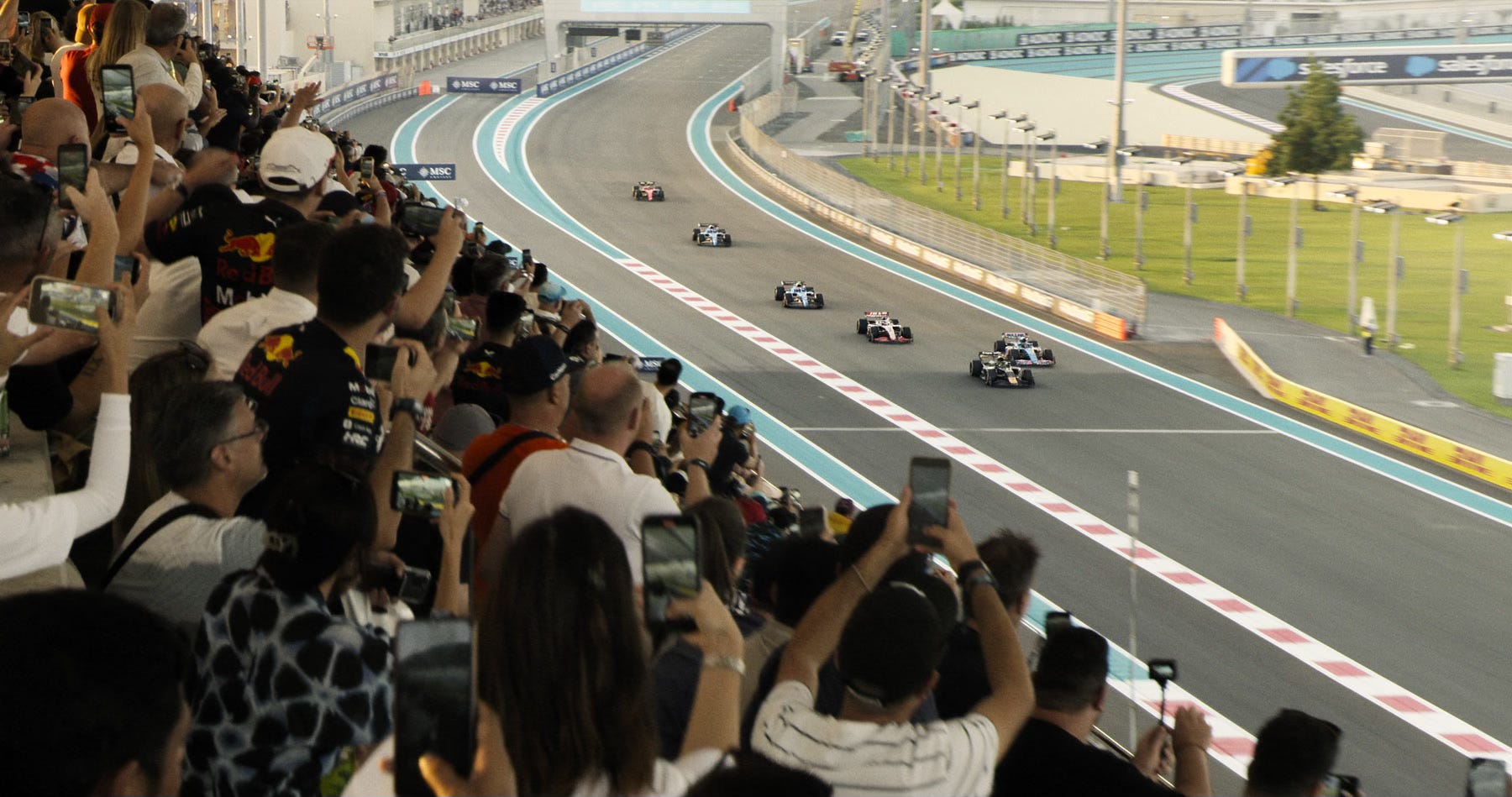
Las Vegas was the most challenging race for filming, for various reasons including limited availability. “The track only exists for three nights,” Kosinski said, related that Pitt and Idris “had no opportunity to practice on this track before they had driven it for the first time, so they had to practice on a simulator.
“Usually we’d get 7-10 minute windows to shoot this movie [on the Las Vegas track]. The cast and the crew really rose to the occasion in those high pressure moments,” he added, suggesting, “it does give the film a certain energy when you’re shooting at a live event that you wouldn’t have if you were staging it or shooting it on a stage or shooting in a volume.”
(All Images courtesy of Apple Original Films)
 | A guest post by
|