
'Sinners' VFX: "We Had To Essentially Disappear Into The Storytelling"
Creating Michael B. Jordan's twin, new tech, and that three-and-a-half minute uninterrupted shot.

Last weekend, Sinners’ Michael B. Jordan won the Actor (previously SAG) Award for his leading role playing identical twins Smoke and Stack, which was made possible by director Ryan Coogler’s VFX team. In all, the Oscar-nominated VFX includes 1013 largely “invisible” VFX shots that make up more than half of the film’s run time (completed by artists at the Stone Studios, Rising Sun Pictures, Outpost, Light, Base Effects, TFX and Industrial Light &n Magic in addition to in-house talent). “This is not a visual effects film where the spectacle is center,” production VFX supervisor Michael Ralla says, emphasizing that Coogler’s overall creative goal was to have the film (65mm) look and feel authentic and timeless. “We had to essentially disappear into the storytelling.”
Here are excerpts from a conversation with Ralla and VFX producer James Alexander about the VFX in Sinners—nominated for a record 16 Oscars including Best Picture—with the Orbit’s Carolyn Giardina.
The 3 and 1/2 Minute Uninterrupted Shot
Ralla: Quite a bit of VFX work was actually done before we ever shot a single frame of the shot—Sam (Miles Caton) is in a trance-state and we’re seeing ancestors, past, present and of the future. So the first thing that we did is we got a camera path from [cinematographer] Autumn Durald Arkapaw, a list of people from [costume designer] Ruth E. Carter that she was outfitting and then the script, as well as some storyboard frames. And we did 50 iterations of previs to figure out what this would look like. It was an incredible collaboration. We would have rehearsals on the weekends to walk through every beat and [composer] Ludwig Göransson was composing at the same time and adjusting his score to what was happening. By the time we actually shot it [on a Steadicam with an Imax camera], we were in a place where Ryan could almost exclusively focus on performance. We knew the [five] stitch points and one full digital takeover for the digital roof burn.
Once we were in post, it’s already started falling into place, with the exception that Ryan wanted to go through the burning roof instead of just tilt up to it. So at that point, our Imax roof element became reference, and then we digitally recreated the whole thing. There are actually more full CG shots in there than you wouldn't ever suspect.
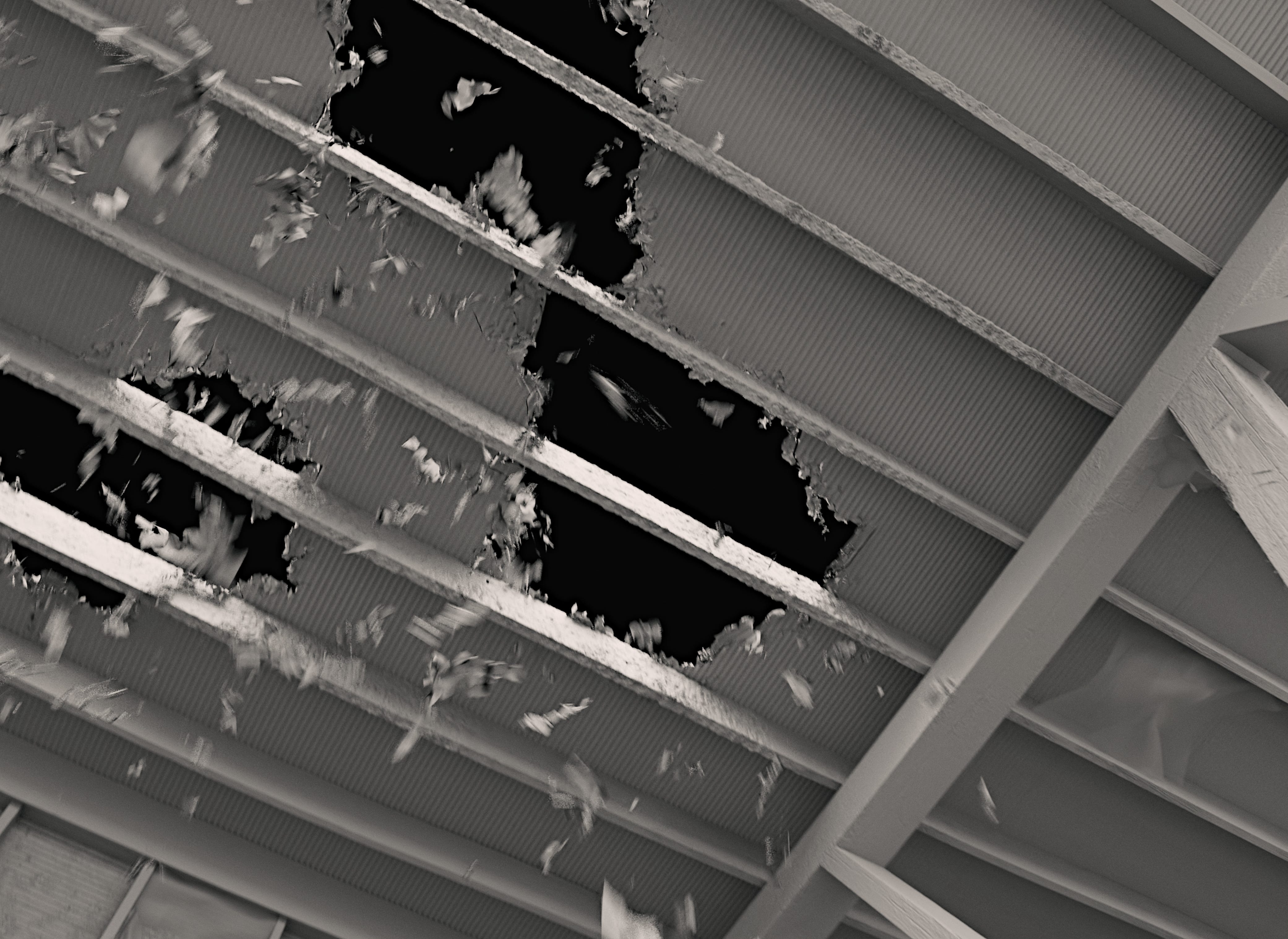
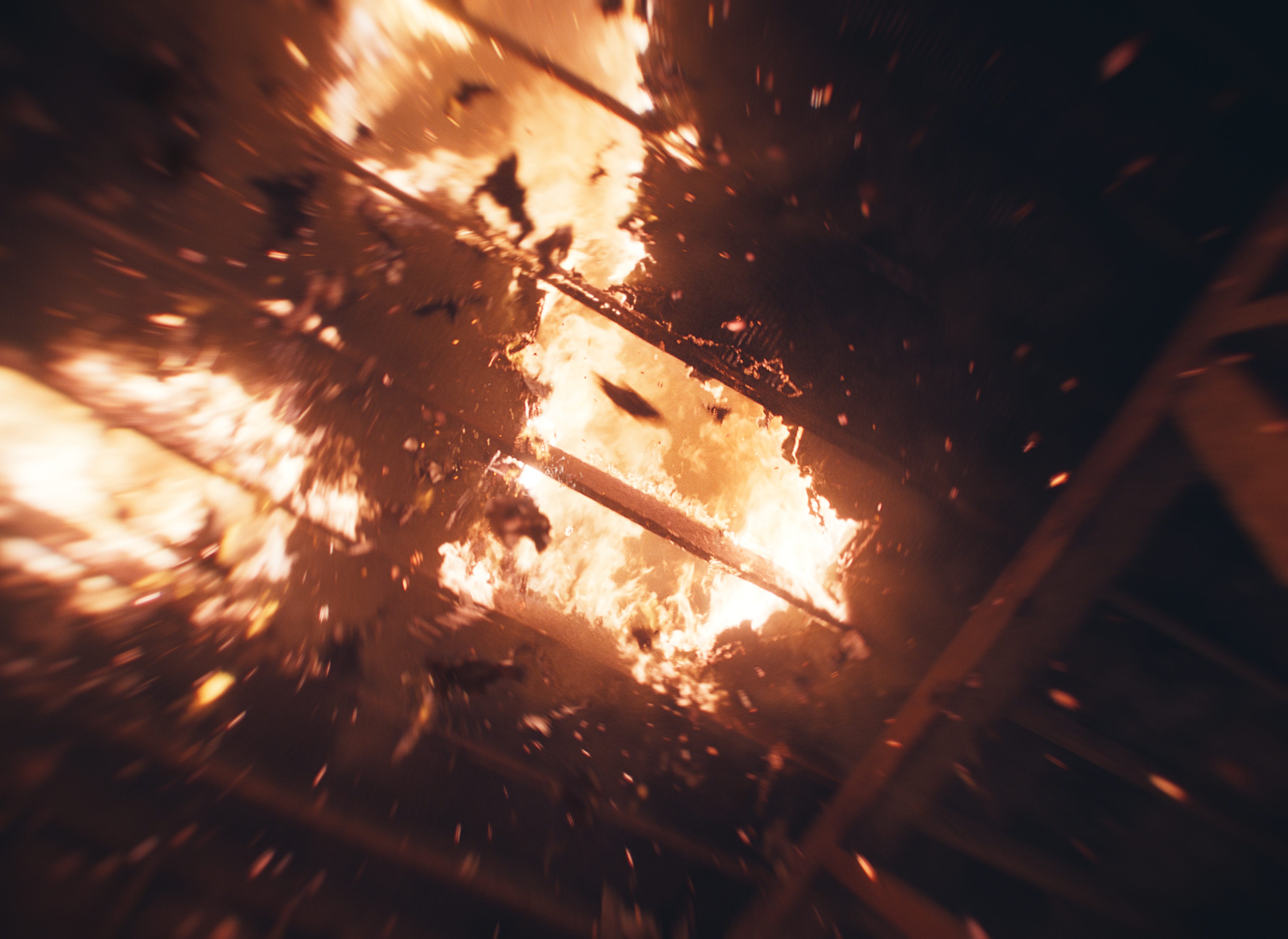
(The burning roof was fully CG. Photo sequence courtesy of Michael Ralla.)
Michael B. Jordan Twins
Alexander: The first step in deciding how to approach the twin work was to understand Ryan’s vision and then tune the VFX approach to suit it so he was never constrained by any of the visual effects work. We had two main ways of creating the twin shots.
Split screenshots where everything would be photographic: Michael would portray one of the twins in the A-side of the shot, and then in the B-side, he would play the other twin. And we would take both those performances and combine them (through compositing). We use a tool called a Techno Dolly for that work, which would mean that we could repeat camera moves.
When there was interaction between the twins, Michael [Ralla] designed a rig called the Halo [which held a ring of cameras around Jordan’s head during filming], that allowed us to accurately capture Michael’s performance, which meant that we could then digitally replace his head in those shots, but always protecting Michael’s performance. The success of every twinning shot is really down to Michael B Jordan’s performance and the incredible distinction that he was able to create between the two twins.
Ralla: [VFX company] Rising Sun Pictures (Mikey 17, Furiosa) are specialists when it comes to doing any kind of head or face replacement work [but they further developed the process for Sinners]. It always had to be [Jordan’s] full head [not just his face] and that was new for Rising Sun. [It also had to meet] the standard that Autumn set for her photography, and that we always asked her to shoot a reference for everything.
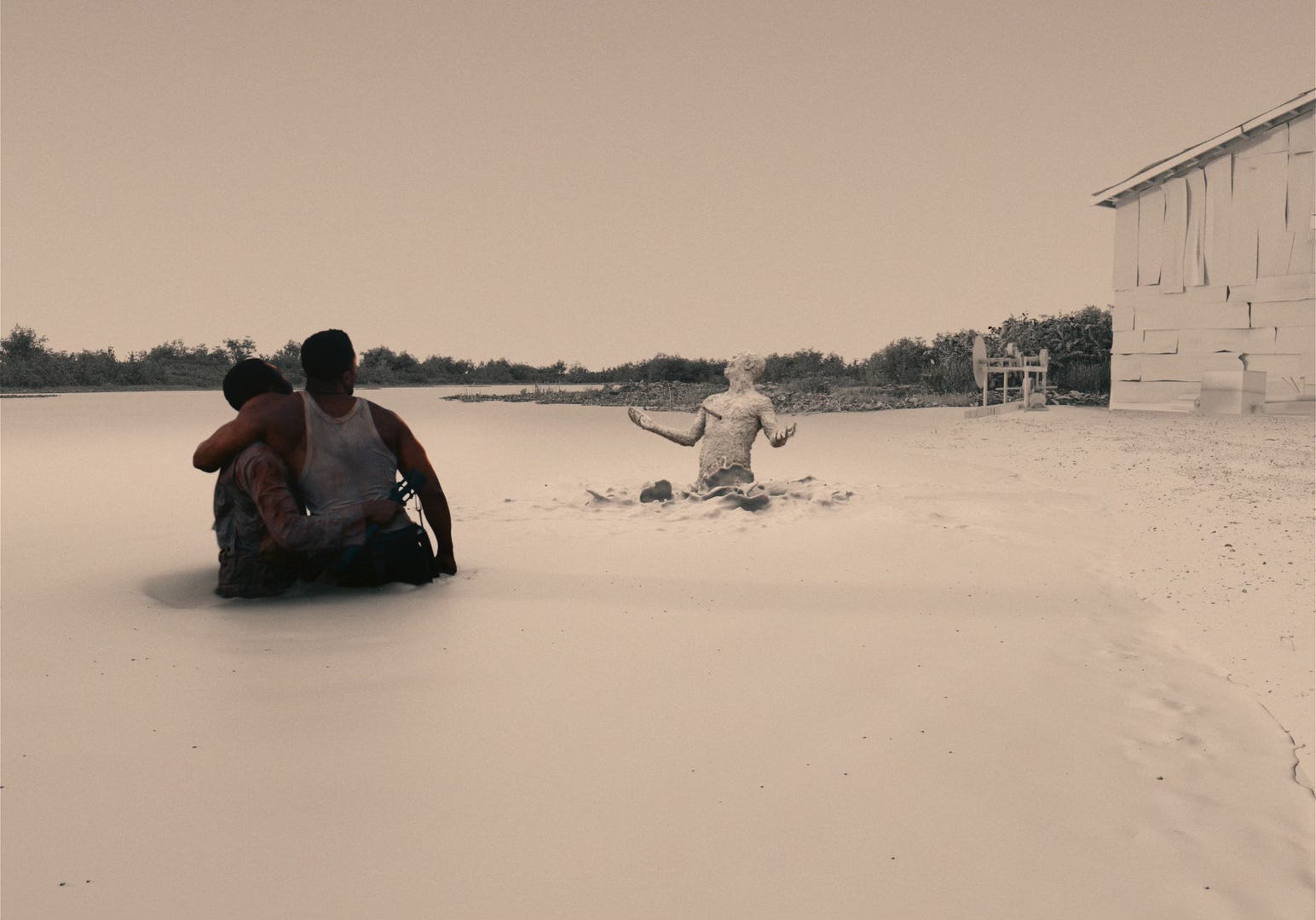
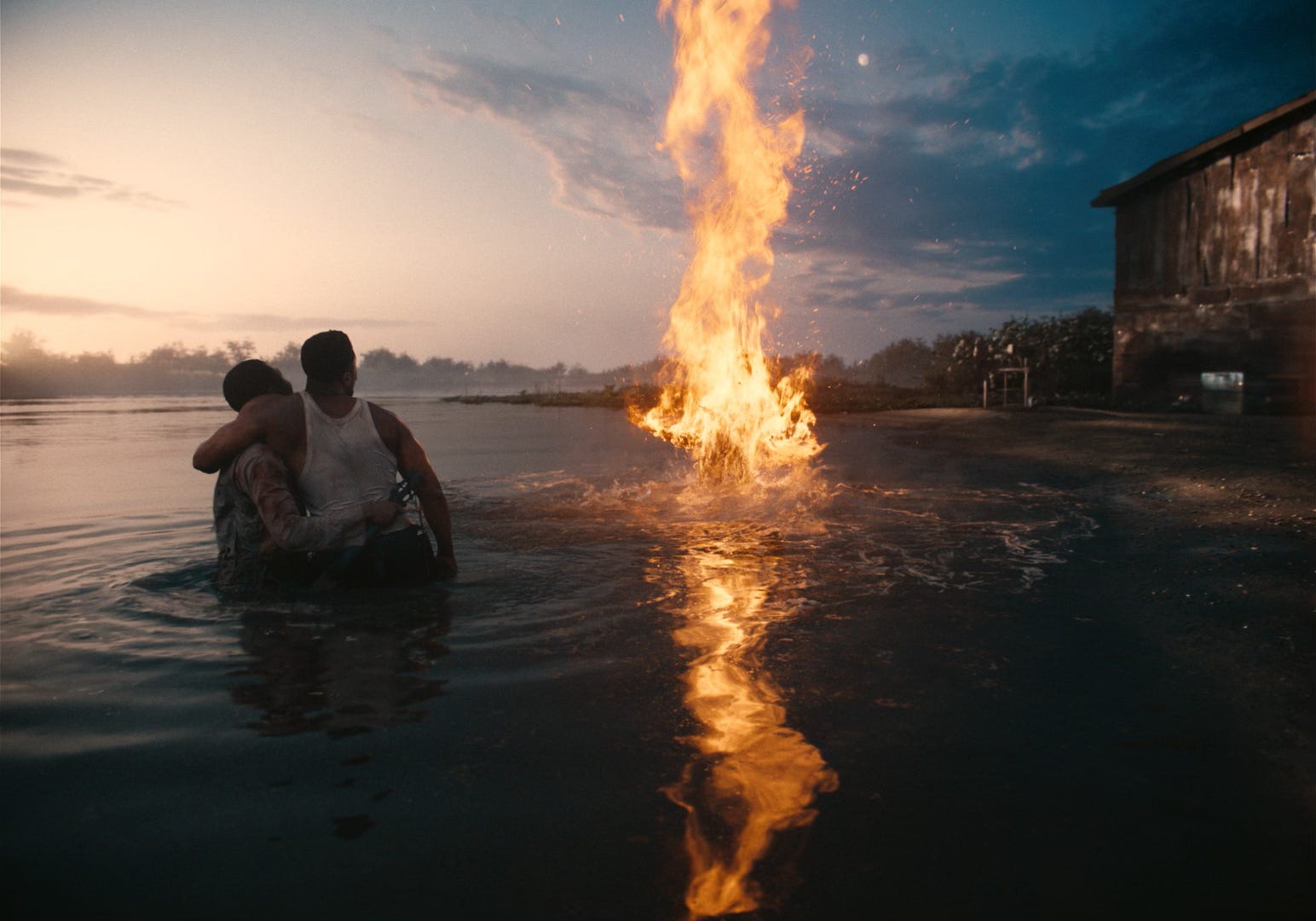
(The making of Sinners, photos courtesy of Michael Ralla)
Additional New Tech
Ralla: We shot [one sequence] in an infinity pool that was right next to a natural pond, but the pond was filled with alligators, and they occasionally also came out. It needed to be extended all the way into the distance. So the guys at Storm put together a solver that you could actually tune to water, that would pick up the ripples on the water surface, and their CG simulation would look identical to that, and that could could just extend the ripples out all the way into the horizon. And then for the fire, we shot references [with practical fire effects] and then they tuned all their fire simulations until they matched that. They tuned their roof burn [in the 3 1/2 minutes shot] until it matched the Imax plant that played that we shot.
Alexander: Cotton fields that appear throughout a huge amount of the exterior environments. The team at Storm built a bespoke cotton plant system that allowed us to deploy up to three million cotton plants within those scenes. So it was tracking each shot and then distributing those digital cotton plants. We had about 50 practical plants that were actually geraniums with little cotton puff balls on them. So we would put those in the foreground of the shots, or if there was a character interacting with them, and then all of the other cotton plants are digital and that system was so finely tuned that we could control the level of maturity of the plants, how close to harvest they were, how healthy they were.